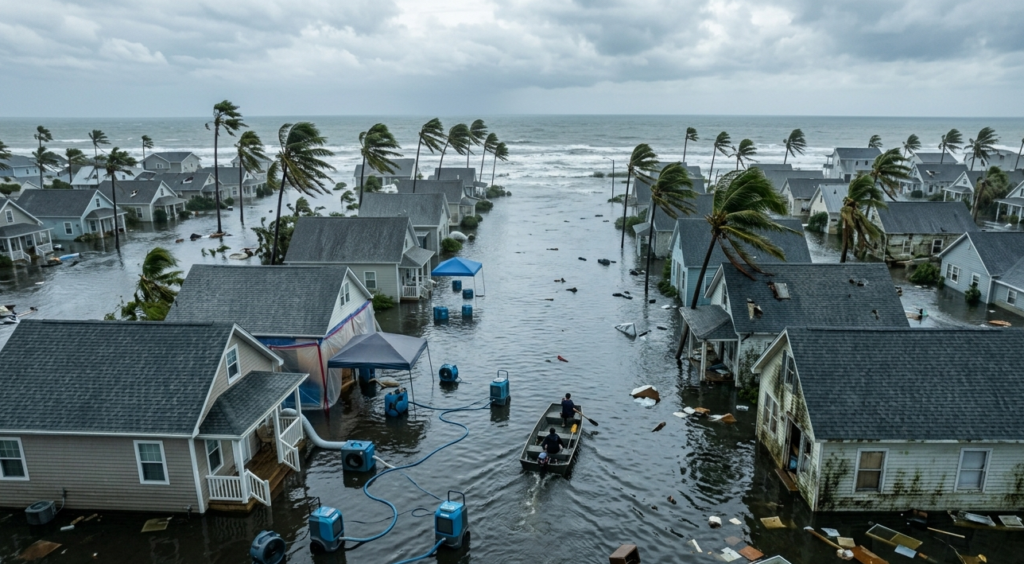
New Jersey and Florida share the same Atlantic coastline – and the same Atlantic hurricane season. From June 1 through November 30, both states face the possibility of tropical systems that can deliver storm surge, wind-driven rain, and catastrophic flooding simultaneously. But how the two states experience those events, and how restoration professionals respond to them, differs significantly based on geography, building construction, and climate.
Understanding those differences helps homeowners on both sides of the Mason-Dixon line make smarter decisions when a storm approaches.
How New Jersey Experiences Hurricane Seaso
New Jersey sits at a geographic inflection point for Atlantic hurricanes. Tropical systems tracking up the East Coast typically weaken as they move north into cooler Atlantic waters but they do not always weaken enough to spare New Jersey significant damage. Hurricane Sandy’s 2012 landfall near Atlantic City delivered storm surge of 4–9 feet across coastal communities, flooding tens of thousands of properties from Cape May to Monmouth County.
What makes New Jersey hurricane water damage distinct:
Storm track geometry. Hurricanes approaching New Jersey from the south push water northward into the funnel of Delaware Bay and the lower Hudson River estuary simultaneously. This geometric amplification of storm surge affects not just beachfront properties but inland waterfront communities along tidal rivers and bays areas that homeowners often don’t consider high-risk until water is at the door.
The nor’easter overlap season. New Jersey’s vulnerability doesn’t end when hurricane season closes November 30. Nor’easters begin ramping up in October and can produce damage comparable to a weak hurricane 50+ mph sustained winds, 12–18 inches of rain or snow, and coastal flooding from prolonged onshore flow. New Jersey homeowners face a combined storm risk window of roughly 8 months per year.
Aging combined sewer infrastructure. Trenton and many older New Jersey municipalities route stormwater and sewage through combined sewer systems. When a hurricane or nor’easter delivers significant rainfall, the system overflows – pushing sewage-contaminated water back through basement floor drains across the city. These Category 3 contamination events require full antimicrobial treatment protocols and affect entire neighbourhoods simultaneously.
How Florida Experiences Hurricane Season
Florida sits at the southern end of the same Atlantic hurricane corridor and faces a fundamentally different exposure profile. Where New Jersey typically encounters storms that have already been tracking over the Atlantic for days and have begun to weaken, Florida sits in the primary formation zone for Gulf and Atlantic storms at peak intensity.
Daytona Beach on Florida’s northeastern Atlantic coast is exposed to storms tracking both from the Gulf through the Florida peninsula and from the Atlantic approaching from the east or southeast. Volusia County has experienced direct hurricane impacts and significant near-miss events in multiple seasons.
What makes Florida hurricane water damage distinct from New Jersey’s:
Storm intensity at landfall. Storms hitting Florida are frequently at or near peak intensity – Category 2, 3, or higher compared to the weakened systems that typically reach New Jersey. Higher wind speeds mean greater building envelope damage, more roof failures, and more entry points for water simultaneously.
Subtropical mold window. Florida’s year-round warmth and humidity create a mold initiation window of 24 hours or less after a water event roughly half the window available in New Jersey’s climate. This compression of the response window is the defining technical challenge for Florida restoration professionals. Certified providers handling water damage repair Daytona Beach FL build their dispatch infrastructure around this 24-hour deadline – because missing it means a restoration project becomes a mold remediation project simultaneously.
Concrete block construction. Florida’s dominant CBS (concrete block structure) construction absorbs water into the masonry itself during flooding events, requiring drying timelines 2–3x longer than wood-frame structures. A water damage event that takes 3–4 days to dry in a New Jersey wood-frame home may take 7–10 days in a Volusia County CBS structure.
No basements. Florida’s high water table makes basement construction impractical throughout most of the state. Water damage enters Florida homes at grade or above through doors, windows, roofing failures, and storm surge – rather than through the foundation flooding that dominates New Jersey events. This changes both the water entry pattern and the restoration scope significantly.
What Both States Share: The NFIP Coverage Gap
Despite their differences, New Jersey and Florida homeowners face the identical insurance coverage problem when a storm hits.
Standard homeowners policies in both states cover sudden and accidental internal water damage – pipe bursts, appliance failures, wind-driven rain through a damaged roof. They do not cover:
- Storm surge flooding
- Groundwater flooding from outside the structure
- Sewer backup (without a specific endorsement)
Both New Jersey and Florida are among the highest NFIP policy states in the country – yet coverage gaps persist. Many homeowners in moderate flood risk zones carry standard policies without flood endorsements, assuming their distance from the ocean provides protection. Sandy and multiple Florida hurricane seasons have demonstrated repeatedly that “moderate risk” is not “no risk.”
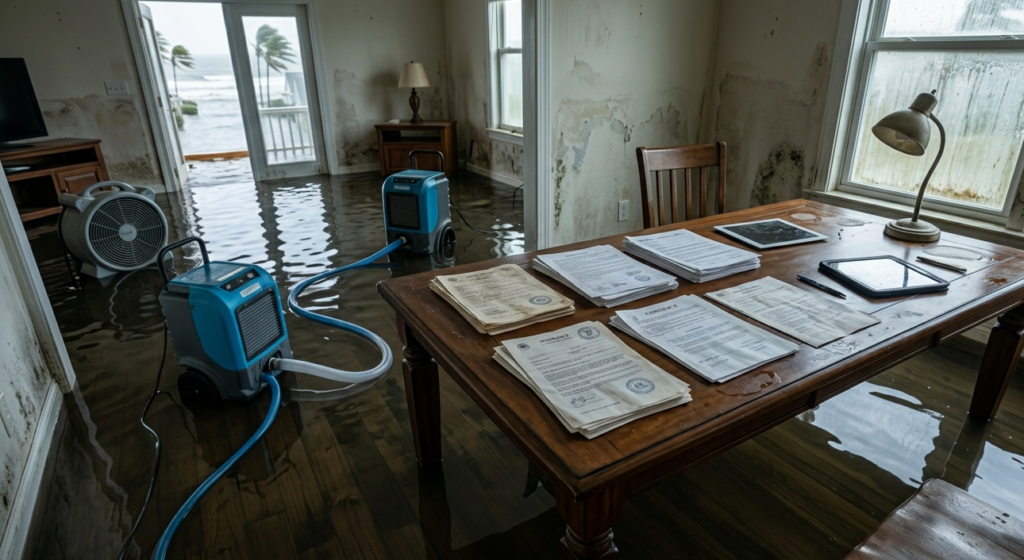
Review your declarations page now. The FEMA National Flood Insurance Program provides coverage for properties in both states – and the time to understand what you have is before a named storm is on the forecast track, not after.
The Response Sequence: Identical in Both States
Despite the climate, construction, and intensity differences, the post-storm response sequence for homeowners is the same in Trenton and Daytona Beach:
1. Wait for the all-clear. Do not re-enter until local authorities confirm it is safe. Downed power lines, unstable structures, and contaminated standing water make premature re-entry dangerous.
2. Document before touching anything. Full photo and video walkthrough of all affected areas before any contents are moved. Email to yourself immediately for timestamped cloud backup.
3. Open your insurance claim before cleanup begins. Call your insurer and file before any significant restoration work starts. Your adjuster needs to document the pre-remediation condition.
4. Call a certified restoration company within two hours of safe re-entry. The IICRC S500 Standard defines the professional baseline for both markets. IICRC-certified contractors provide daily drying logs and final moisture clearance certificates – documentation your insurer will require and that protects you from mold disputes months later.
5. Do not restart HVAC until inspected. Flood-affected ductwork distributes contamination to every room when the system runs. In both New Jersey and Florida, HVAC inspection is mandatory before restart after any flooding event.
Temporary Housing and Timeline Expectations
One area where New Jersey and Florida diverge significantly is temporary housing duration after a major storm event.
In New Jersey, the restoration timeline for a significant hurricane or nor’easter event in a wood-frame home runs 2–4 weeks for extraction and drying, followed by 4–8 weeks for rebuild depending on scope. Most displaced New Jersey homeowners are back in their homes within 2–3 months of a manageable event.
In Florida, the CBS construction timeline and the need for full mold assessment add time to both phases. A significant Daytona Beach hurricane event in a CBS home may run 3–5 weeks for drying and 6–12 weeks for rebuild. Planning for this timeline – including temporary housing arrangements and content storage – reduces stress significantly during the recovery period.
Conclusion
New Jersey and Florida face the same storm season calendar but experience it very differently. Storm intensity, construction type, mold timeline, and insurance exposure all differ between the two markets. What does not differ: the homeowners who recover fastest are the ones who document immediately, respond within hours, and work with certified local professionals who understand their specific market’s storm patterns and building stock.
NJ Water Damage Restoration Pros serves Trenton, NJ and surrounding communities with 24/7 emergency response, flood extraction, structural drying, mold remediation, and sewage cleanup. IICRC-certified. Licensed and insured.
Call: (877) 665-8566
Leave a Reply