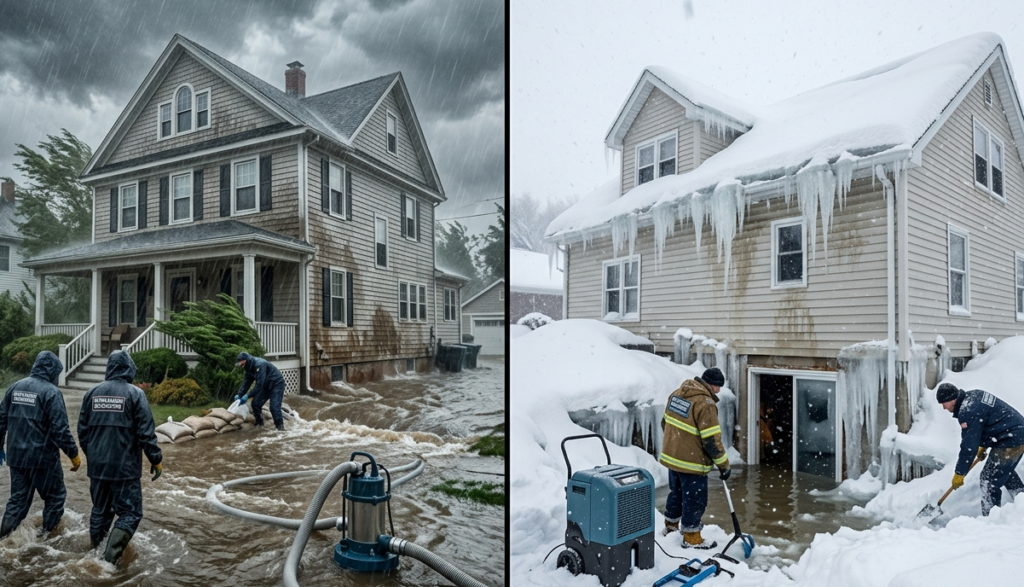
New Jersey and Ohio are separated by roughly 500 miles but when it comes to water damage, they share more in common than most homeowners would expect. Both states deal with brutal winters, aging housing stock, basement-heavy residential construction, and storm seasons that test every weak point in a building envelope simultaneously.
What differs is the storm type that drives the damage. In New Jersey, nor’easters and Atlantic hurricane remnants are the primary culprits. In Ohio, it’s lake-effect snow events and freeze-thaw cycling driven by Lake Erie. Understanding these differences helps homeowners on both sides of the Appalachians respond faster and smarter when water damage strikes.
What a Nor’easter Does to a New Jersey Home
Nor’easters are low-pressure systems that track up the Atlantic coast, pulling cold air from the north and moisture from the Atlantic simultaneously. For New Jersey homeowners, a significant nor’easter can deliver:
- 12–24 inches of heavy, wet snow within 24–36 hours
- Wind gusts of 40–60 mph that drive moisture into every building envelope gap
- Rapid temperature swings that melt accumulated snow quickly, overwhelming drainage systems
- Coastal storm surge events for properties in Shore communities
The water damage pattern from a nor’easter is multi-source. Wind-driven rain and snow penetrate around window frames, through deteriorated flashing, and under roofing lifted by gusts. Ice damming forms rapidly on roofs that were warm from heating systems when the storm hit. And when the storm breaks and temperatures rise, the accumulated snow load on flat or low-slope roofs melts faster than gutters and drains can handle.
Trenton and the greater Mercer County area face an additional risk factor: the Delaware River. Significant nor’easters frequently combine with Delaware River basin flooding as upstream snowmelt and rainfall surge downstream simultaneously. The Delaware River Basin Commission maintains real-time flood monitoring for this exact scenario – homeowners in flood-adjacent areas of New Jersey should have this resource bookmarked.
New Jersey’s Aging Infrastructure Problem
New Jersey has one of the oldest housing inventories in the country. A significant percentage of residential properties in Trenton and surrounding Mercer County were built before 1960 – structures where:
- Foundation waterproofing was minimal or non-existent by modern standards
- Basement window wells are original construction and no longer drain effectively
- Sewer lateral connections have decades of root intrusion and joint offset
- Combined sewer systems in older neighbourhoods route both stormwater and sewage through shared pipes
When a nor’easter dumps 18 inches of snow and it melts within 48 hours, the combined sewer system in older New Jersey municipalities cannot handle the simultaneous stormwater volume. The result is sewage backup through basement floor drains – Category 3 (black water) contamination events that require full antimicrobial treatment protocols, not just extraction and drying.
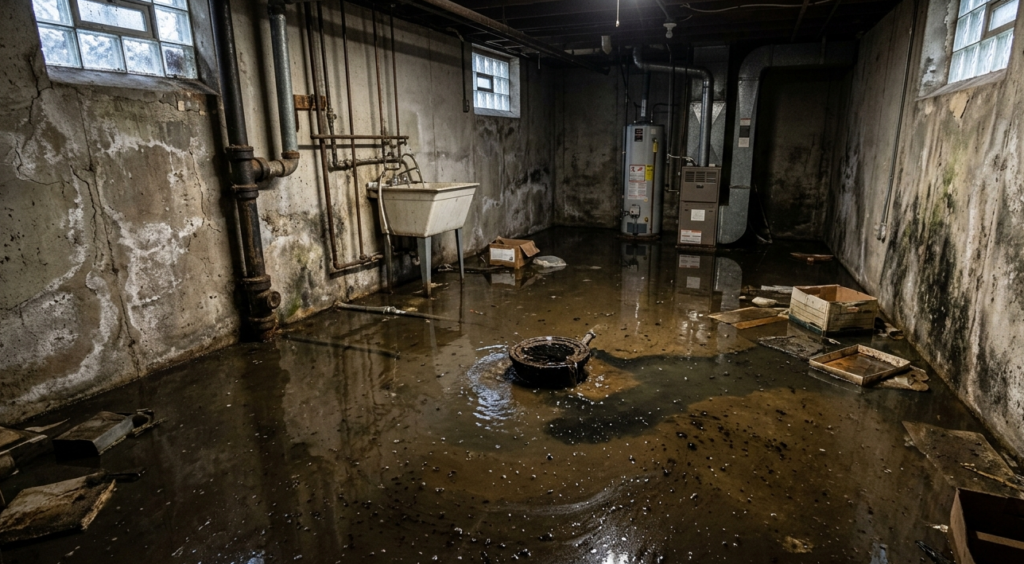
This is the single most underestimated water damage risk in older Northeast US cities. It doesn’t look dramatic from the street. But inside a basement that just took on sewage-contaminated backflow, every surface below the waterline needs to be treated as a biohazard.
What Lake-Effect Events Do to Ohio Homes
Five hundred miles west, Cleveland and Northeast Ohio face a structurally similar but meteorologically different winter damage driver: lake-effect snow from Lake Erie.
Lake Erie is the shallowest of the Great Lakes, which means it retains summer heat well into autumn and generates significant lake-effect snow events from October through January. Cleveland sits directly in the primary lake-effect snow belt, making it one of the highest snowfall cities in the continental US by average annual accumulation.
The water damage pattern differs from nor’easters in its distribution. Lake-effect events are highly localised – a band 20–40 miles wide can receive 2–3 feet of snow while areas outside the band remain clear. This creates a rapid accumulation and melt scenario that overwhelms residential drainage systems quickly, particularly in the older residential neighbourhoods of Cleveland’s east side.
Ohio’s freeze-thaw cycling adds a layer that New Jersey shares but in different proportion. Temperatures in Northeast Ohio cross the freezing point repeatedly throughout winter, expanding and contracting water in foundation cracks, masonry joints, and pipe runs in exterior walls. Over a single winter, this process can turn a minor foundation seam into a significant spring water intrusion pathway.
Certified specialists handling flood damage Cleveland are structured specifically for these events – rapid basement extraction after snowmelt flooding, freeze-thaw structural assessment, and the specific pipe failure patterns that Northeast Ohio winters produce in pre-1970 residential construction.
The Basement: Ground Zero in Both States
Whether the storm comes from the Atlantic or Lake Erie, the basement is where most residential water damage in both New Jersey and Ohio begins. The response sequence is the same regardless of source:
1. Identify the water category first.
- Clear water from a supply pipe or roof drainage = Category 1
- Grey water from appliance overflow or minor stormwater = Category 2
- Sewage backup, combined sewer overflow, or outdoor flooding = Category 3
Category determines your PPE requirements before entering, the salvageability of materials, and the antimicrobial treatment scope. Getting this wrong at the start creates health risks and insurance complications.
2. Document before moving anything.
Walk the full basement with your phone camera before touching a single item. Water lines on walls, affected contents in place, visible structural damage – all of it. Email the photos to yourself immediately for timestamped cloud backup. Then call your insurer and open the claim.
3. Call a certified restoration company within the first two hours.
The IICRC S500 Standard defines the industry baseline for water damage response – any contractor you hire should be certified to this standard and able to provide daily drying logs and a final moisture clearance certificate. In both New Jersey and Ohio markets, the mold initiation window in winter-flooded basements runs 24–48 hours even with low ambient temperatures, because the heat running in the structure keeps conditions warm enough for fungal growth.
Ice Dams: A Shared Problem, Different Roof Types
Both New Jersey and Ohio experience ice dam formation – but the roof types most affected differ between the two markets.
In New Jersey, the prevalence of older colonial and cape cod construction means steeply-pitched roofs are common. Ice dams form at the eaves when attic heat loss melts snow on the upper roof surface, and meltwater refreezes at the cold overhang. Water backs up under shingles and enters at the top of exterior walls.
In Ohio, the higher frequency of ranch construction and the aggressive lake-effect accumulation loads mean ice dams can form across wider roof sections. The rapid accumulation-and-melt cycle of lake-effect events creates conditions where the entire roof surface is compromised rather than just the eave line.
In both cases, the restoration response is identical: extract the interior water, dry the wall cavities and ceiling assemblies, and address the attic insulation and air sealing failures that caused the ice dam in the first place. Treating visible water damage without addressing the attic condition guarantees recurrence within the same winter season.
Working With Insurance After a Storm Event
Both New Jersey and Ohio homeowners filing storm-related water damage claims need to understand the distinction between homeowners insurance and flood insurance.
Standard homeowners policies typically cover:
- Sudden and accidental internal water damage (pipe burst, appliance failure)
- Wind-driven rain intrusion
- Ice dam damage
Standard homeowners policies typically do NOT cover:
- Groundwater flooding from outside the structure
- Sewer or drain backup (requires a specific endorsement)
- Storm surge
If your basement flooded from groundwater, storm surge, or sewer backup – you need either a flood insurance policy through FEMA’s National Flood Insurance Program or a specific water backup endorsement on your homeowners policy. This is one of the most common and painful coverage gaps in both the New Jersey and Ohio markets.
Review your declarations page now – before the next storm event – to understand exactly what is and is not covered.
Conclusion
Nor’easters and lake-effect storms are different meteorological animals. But the water damage they produce inside New Jersey and Ohio homes follows recognisable patterns that certified restoration professionals in both markets understand deeply. Act fast, document thoroughly, and hire contractors who know your region’s specific failure patterns – not just the general restoration protocol.
NJ Water Damage Restoration Pros serves Trenton, NJ and surrounding communities with 24/7 emergency response, flood extraction, structural drying, mold remediation, and sewage cleanup. IICRC-certified. Licensed and insured.
Call: (877) 665-8566
Leave a Reply